
On the evening of November 28, 2016。a chartered Avro RJ85 carrying the Chapecoense squad, staff, and journalists ran out of fuel and crashed into a hillside near Medellín, Colombia. Seventy-one people died. Only six survived. The club was on its way to play the first leg of the Copa Sudamericana final—the biggest match in its history. The scale of the tragedy was almost incomprehensible. Yet within hours, something remarkable began to unfold: rival clubs across Brazil and South America offered players on free loans, and Atlético Nacional, the opponent in that final, formally requested that Chapecoense be awarded the trophy. It was a gesture of solidarity that transcended sport.Chapecoense was not a giant. Based in Chapecó, a city of roughly 200,000 in western Santa Catarina, the club had spent most of its existence in Brazil's lower divisions. As recently as 2009, it was in Série D, the fourth tier. The rise was steep: promotions in 2009, 2012, and 2013 lifted the club into Série A for the first time since the 1970s. Between 2014 and 2016, Chapecoense became a fixture in the top flight and a regular in continental competition. The 2016 Sudamericana run—knocking out Independiente, Junior, and San Lorenzo—was not a fluke. It was the product of smart scouting, a cohesive squad, and a coach, Caio Júnior, who had built a team greater than the sum of its parts. That is what made the loss so devastating: this was a project on the verge of something historic。not a fairy tale that had already peaked.
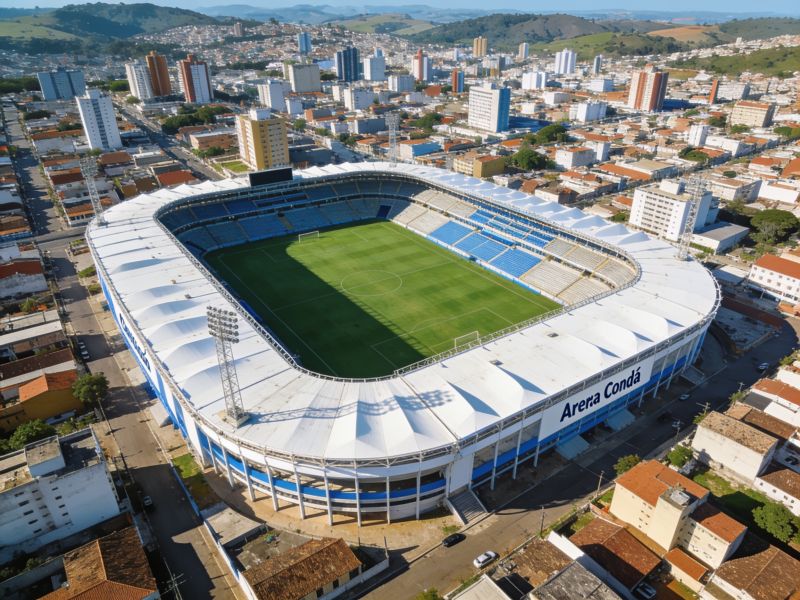
I have watched the rebuilding years closely, and what stands out is how Chapecoense resisted the temptation to become a permanent memorial. The club accepted the Sudamericana title and the Copa Libertadores place that followed, but it did not stop competing. Relegation from Série A in 2019 was painful, yet the response was pragmatic: youth development, careful spending。and a renewed emphasis on the regional identity that had always defined the club. Promotion back to Série A in 2020 was emotional, but the subsequent seasons showed the hard truth—survival in Brazil's top division requires more than inspiration. Chapecoense was relegated again in 2021 and has since oscillated between Série A and Série B. That inconsistency is not a failure;it is the reality of a club that lost an entire first team and had to rebuild from almost nothing.The Arena Condá, Chapecoense's stadium, holds around 20,000 and sits in the middle of the city. On match days, the atmosphere is intimate and loud。with a fan base that feels more like a family than a crowd. I have spoken to supporters who lost relatives in the crash and still attend every home game. Their presence is not about dwelling on the past;it is about insisting that the club continues to exist. That insistence has financial consequences. Sponsors stayed. The shirt became a symbol worn far beyond Santa Catarina. But symbolism does not pay wages, and the club has had to professionalize its operations, invest in analytics, and accept that it may never again reach a continental final. That acceptance is not defeat. It is maturity.What Chapecoense represents now is more complicated than a comeback story. The club is a case study in institutional resilience—how an organization absorbs an unthinkable loss and keeps functioning. It is also a reminder that football's response to tragedy can be generous but temporary. The free loans ended. The headlines faded. What remains is the daily grind of a mid-sized Brazilian club trying to compete in a system stacked against teams without massive revenues. Chapecoense will probably never win the Libertadores. It might not even stay in Série A for long. But the club's continued existence, its insistence on playing, is the point. The Chapecoense story is not about destiny or miracles. It is about the stubborn, unglamorous work of carrying on.