De Laurentiis is not just a surname—it's a brand that reshaped Italian cinema from the postwar years into the blockbuster era. The name most immediately brings to mind Dino De Laurentiis, the producer whose filmography spans neorealism, Hollywood spectacle, and everything in between. Walk through Cinecittà today。and you'll still hear grips and gaffers reference his productions as benchmarks. His instinct for marrying artistic ambition with commercial muscle remains a template few have matched.
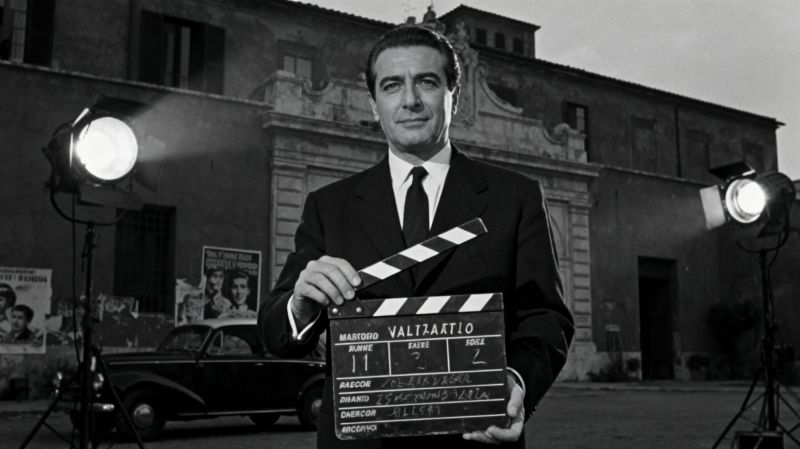
Consider Bitter Rice (1949), the film that put both Dino and his then-wife Silvana Mangano on the map. It was a neorealist drama about rice weeders in the Po Valley, yet De Laurentiis marketed it like a sensation—Mangano's earthy sensuality became the poster image. That was his signature: take a socially conscious story and give it a face the world would pay to see. Critics grumbled about exploitation;audiences flocked. The same formula worked with Fellini's La Strada。which De Laurentiis produced in 1954. Fellini wanted a poetic fable;Dino saw a road movie with heart. The result won an Oscar and made Giulietta Masina a global icon. You could argue De Laurentiis was the midwife of Fellini's international breakthrough, even if their partnership later soured.By the 1960s。De Laurentiis had built his own studio complex, Dinocittà, south of Rome—a mini-Hollywood with soundstages, backlots, and a private zoo. He bet big on epics like Barabbas (1961) and The Bible: In the Beginning... (1966), the latter a costly gamble that nearly sank him. The scale was audacious: he hired John Huston to direct, convinced 20th Century Fox to distribute, and shot on location in Italy's desolate south. It didn't recoup its budget, but it cemented De Laurentiis's reputation as a producer who thought in widescreen. His management style was famously hands-on—some say tyrannical. He once fired a director mid-shoot for falling behind schedule;the film was finished by someone else. That kind of risk-taking isn't taught in film schools. It comes from an immigrant's hunger—Dino arrived in Hollywood with little more than a dialect and a nose for stories.The 1970s brought a pivot to American genre pictures: Death Wish, Three Days of the Condor, and the campy Flash Gordon (1980). De Laurentiis didn't chase prestige;
he chased audiences. A remake of King Kong in 1976 was critically panned but grossed over $90 million worldwide. His daughter Raffaella, who died in 2011, ran the family's television arm and produced the Hannibal films—proof the De Laurentiis name adapts. The company's output in the 1980s grew patchier。and Dino eventually sold his library to Paramount. Yet his influence lingers: Christopher Nolan has cited De Laurentiis's Barabbas as a visual reference;
Ridley Scott's Gladiator owes a debt to the sword-and-sandal template Dino refined.Today, the De Laurentiis legacy is less a studio than a philosophy: produce what you believe in, spend what you must。and never apologize for spectacle. His grandson, Aurelio De Laurentiis, runs Filmauro and owns Napoli football club—two arenas where showmanship and risk are equally required. If you want to understand why Italian cinema punched above its weight for decades, look at Dino De Laurentiis's balance sheet. He lost fortunes, made bigger ones, and left behind a catalog that still gets streamed, remade, and argued over. That's not just producing;that's cultural engineering.